
Renters make up the majority of Council District 11 residents, but Traci Park has made it harder to keep renters housed and easier to block new housing. She has consistently opposed tenant protections, slowed affordable housing, and worked to limit broader housing reforms while siding with property and real-estate interests in almost every fight. The result is a clear pattern: more displacement pressure, less housing progress, and fewer protections for the people who actually rent in this district.
Ending homelessness starts with preventing people from losing housing in the first place.
Evictions, sudden rent increases, and landlord harassment are among the most common pathways into homelessness. Tenant protections such as eviction safeguards, rent stabilization, relocation assistance, and legal defense help stabilize households before a crisis occurs and are widely recognized as core homelessness prevention tools.
Without strong renter protections, people are pushed from housing into vehicles, temporary arrangements, and eventually the street.
In Council District 11, where renters make up the majority of residents and housing costs continue to rise, these protections are not abstract policy debates. They are essential tools for keeping people housed.
Within weeks of joining the Council, she voted against extending eviction protections tied to the Emergency Rental Assistance Program, protections intended to prevent renters with pandemic-era debt from being displaced while repayment assistance remained available. She also voted against establishing permanent post-pandemic renter safeguards, including just-cause eviction protections, relocation assistance, and limits on eviction over small amounts of unpaid rent.
In early 2023, she joined Republican John Lee as the only other councilmember to vote against expanding relocation assistance, which requires landlords to compensate tenants forced out through no-fault evictions or steep rent increases. She also voted against protections preventing eviction over small rent debts, measures intended to reduce displacement over minor debts.
Her opposition continued across multiple tenant protection votes. Park was among a small minority voting against strengthening the Tenant Anti-Harassment Ordinance, which protects renters from coercive tactics used to force displacement, and opposed the City Council’s resolution supporting the Justice for Renters Act. And in late 2025, she joined a small minority opposing historic rent stabilization reforms that capped annual rent increases for tens of thousands of tenants living in rent-stabilized housing across the city.
During wildfire recovery debates, Park opposed renter protections tied to disaster displacement and questioned eviction safeguards for tenants who lost income after the fires. Low-wage workers whose livelihoods depended on affected neighborhoods faced immediate housing instability without those protections, yet Park maintained her opposition.
After the Palisades fire, displaced residents entered an already tight rental market and rent gouging surged. Traci Park opposed stronger anti-gouging measures and failed to enforce the city’s ordinance, leaving constituents competing for replacement housing without meaningful safeguards.
Her office also explored changes that could allow short-term rentals in rent-stabilized units, a move that would reduce long-term housing supply and increase displacement risk.
Traci Park also sought to weaken Measure ULA, a primary funding source for eviction defense, rental assistance, and affordable housing programs. Expanding exemptions and carveouts reduces the city’s ability to keep renters housed.
Taken together, the pattern is consistent: when tenant protections are proposed, Park works to weaken them, limit them, or block them, increasing the likelihood that residents fall into housing instability, vehicle living, or homelessness.
Los Angeles is facing a severe affordability crisis driven in part by years of under-building and resistance to affordable housing in high-resource neighborhoods. Projects often fail not because funding or need is lacking, but because political opposition, shifting requirements, and prolonged approval processes make housing too risky or costly to deliver.
Executive Directive 1 was meant to cut through the delays that stop affordable housing from being built, but fierce local resistance in coastal communities like Council District 11 continues to slow projects and block new homes.
Against this backdrop, Traci Park has repeatedly taken actions that slow, redirect, or block affordable and supportive housing in her district, delaying projects intended to house vulnerable residents while the housing shortage continues to deepen.
Park built her early political profile by organizing against efforts to shelter people experiencing homelessness in Venice. When city officials moved to convert the Ramada Inn near her home into transitional housing with services provided by People Assisting the Homeless (PATH) through Project Roomkey, Park led the neighborhood push to stop the conversion. She also aggressively opposed the Venice “A Bridge Home” shelter for unhoused adults and transitional-age youth, labeling it “disastrous” and a “blight on our community.”
That approach continued as she entered office. Park intervened to kill a $2.3 million plan to house people living in RVs along Jefferson Boulevard near the Ballona Wetlands, instead favoring a massive police-led sweep of unhoused residents in the area. Shortly afterward, a man living in an RV in the area died in a fire, a tragedy that underscored the consequences of clearing encampments without providing stable housing alternatives.
Traci Park has also played an instrumental role in blocking the Venice Dell project, the most high-profile affordable housing fight on the Westside and a flashpoint that has drawn regional and national attention. Long before taking office, Park aligned herself with neighborhood opposition to the development, derided by critics as the “Monster on the Median,” and ran for Council pledging to stop or relocate it. Once in office, she followed through by advancing alternative site proposals, reopening settled questions after approvals were secured, and introducing motions that prolonged uncertainty around funding, land use, and legal risk. The result has been years of delay for a project intended to deliver deeply affordable housing and homes for people exiting homelessness, even as state housing officials warned that city obstruction could place Los Angeles in violation of housing law.
Other sites show the same pattern. Park opposed or helped stall efforts to convert the Ramada Inn into housing, backed positions that left Thatcher Yard tied up in prolonged political conflict, and moved to delay supportive housing proposals through additional reviews, relocation ideas, and shifting requirements.
Her handling of the West LA Commons courthouse site raises similar concerns. The publicly owned parcel was expected to deliver nearly 900 homes, including more than 400 affordable units, but after Traci Park was elected, the project collapsed with little transparency about why or what would replace it. The courthouse has now sat vacant for years, nearby infrastructure remains neglected, and interim housing trailers have sat fenced off without deployment.
When she isn’t rejecting housing outright, Traci Park advances procedural steps that stretch timelines, reopen settled questions, or introduce new uncertainty. These moves make projects harder to finance, easier to abandon, and slower to deliver at a moment when housing is urgently needed.
Traci Park has not only delayed individual housing projects. She has also opposed broader reforms designed to increase housing supply citywide.
She opposed SB 79, the state law allowing more housing near major transit stops, and introduced a motion calling for extensive studies and legal review of the law’s impacts, a move housing advocates criticized as a bureaucratic stall tactic.
She also opposed SB 9, the state law allowing duplex and small multi-unit housing on single-family lots, and formally urged the governor to suspend the law in the Pacific Palisades after the fire, warning it could trigger an “unforeseen explosion of density.”
Park was also the lone dissent against local implementation of SB 4 or the “Yes in God’s Backyard” (YIGBY) law, legislation allowing affordable and supportive housing on land owned by religious institutions and colleges. The vote would have expanded opportunities to build deeply affordable housing on underused community land, yet Park opposed the measure even as every other councilmember supported moving forward.
At the city level, Park opposed Mayor Karen Bass’s Executive Directive 1, which was created to speed up affordable housing approvals by removing bureaucratic barriers and reducing discretionary delays. Her criticism focused on limiting the directive’s reach rather than accelerating housing production.
She also wields safety arguments selectively to resist housing. Wildfire risk and evacuation concerns have been used to oppose new housing in certain neighborhoods, while Traci Park cast the lone vote against stairwell reforms, which make larger apartments more feasible on infill lots, thus addressing the city’s shortage of family housing.
Taken together, these positions reflect a consistent approach: resist zoning changes, limit tools designed to accelerate housing production, and prioritize preservation of existing neighborhood patterns even as housing demand and costs continue to rise.
Traci Park’s housing record cannot be separated from the monied interests that financed her rise to office. She has taken millions in campaign support from real estate developers, corporate landlords, and property industry PACs, including some of the largest property owners on the Westside.
Flush with developer cash, Park seems to always take positions in housing fights that favor those property owners over tenants.
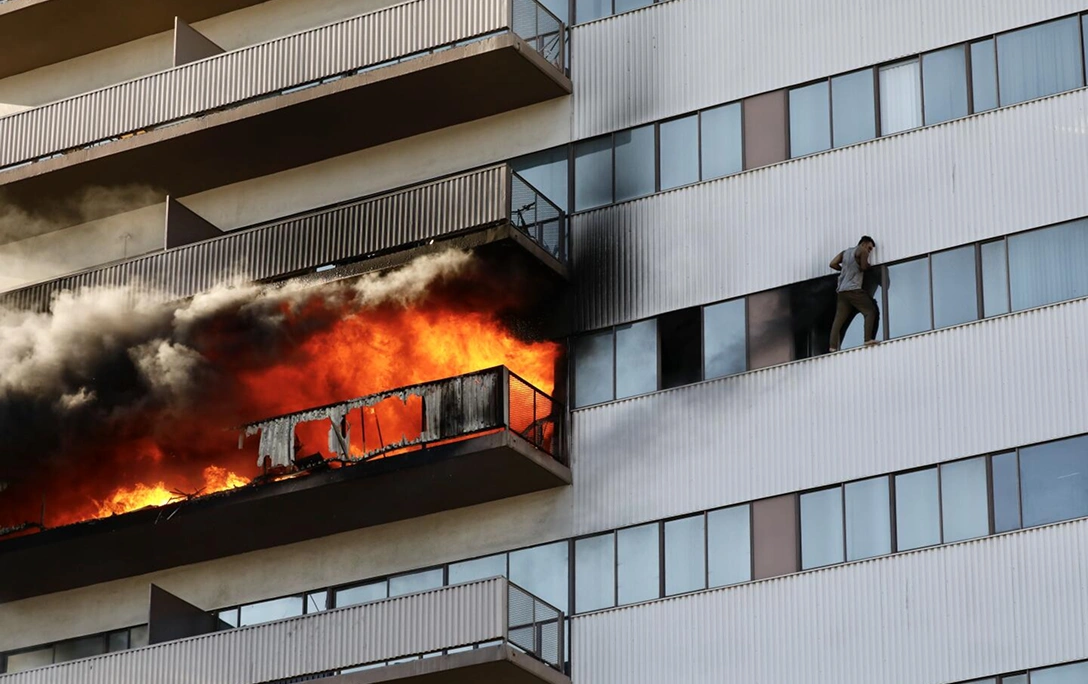
At Barrington Plaza, a property owned by one of Park’s largest financial supporters, hundreds of tenants were subject to an illegal Ellis Act eviction following fires and renovation plans tied to long-delayed safety upgrades. Park declined to use the city’s leverage to protect tenants facing eviction, limiting her response largely to monitoring the process while displacement moved forward.
Public records also reveal direct communication between Park’s office and statewide landlord advocacy organizations during housing debates, showing coordination with industry groups while tenant protections and housing reforms were under consideration.
Her positions in fire safety and disaster recovery debates further reflect this alignment. Conflicts over retrofit costs, renovation-driven evictions, and renter protections repeatedly placed landlord financial concerns at the center of decisions affecting tenant stability.
Taken together, the pattern is difficult to ignore. Park has accepted substantial real-estate funding and consistently taken positions that protect property interests, weaken tenant safeguards, and slow policies intended to expand affordable housing.